|
|
|
01 |
Reveries -- Passions |
|
|
Largo
Allegro agitato e appassionato assai
Tempo I
Religiosamente |
12:34 |
|
|
02 |
Un bal |
|
|
Valse: Allegro non troppo |
06:08 |
|
|
03 |
Scène aux champs |
|
|
Adagio |
16:23 |
|
|
04 |
Marche au supplice |
|
|
Allegretto non troppo |
04:09 |
|
|
05 |
Songe d'une nuit du Sabbat |
|
|
Larghetto
Allegro
Allegro assai
Allegro
Lontano
Ronde du Sabbat
Dies irae |
09:22 |
|
| Location |
Telarc Collection |
| Disc 1 |
: CD-80076 |
|
| Studio |
Severance Hall, Cleveland, Ohio |
| Catalog |
CD-80076 |
| Packaging |
Jewel Case |
| Recording Date |
5/10/1982 |
| Spars |
DDD |
| Sound |
Stereo |
|
| Classification: |
TELARC CLASSICAL |
|
| Composer/Artist |
Hector Berlioz (1803 - 1869) |
|
|
Companies, etc.
Phonographic Copyright (p) – Telarc Records
Copyright (c) – Telarc Records
Manufactured By – Digital Audio Disc Corp.
Recorded At – Severance Hall
Credits
Art Direction – Ray Kirschensteiner
Composed By – Hector Berlioz
Conductor – Lorin Maazel
Engineer [Recording] – Jack Renner
Liner Notes – Steven Ledbetter
Orchestra – The Cleveland Orchestra
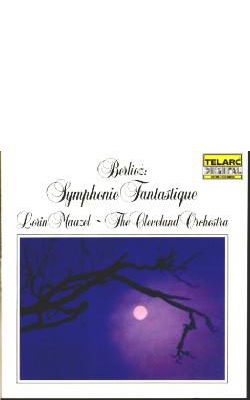
Photography By [Cover] – Ralph Marshall (2)
Producer [Production Assistance] – Elaine Martone, Ronald Whitaker
Producer [Recording] – Robert Woods (2)
Notes
Total Playing Time: 48:35
*** Technical Information ***
Recorded in Severance Hall, Cleveland on May 10, 1982
Microphones: Schoeps Colette Series
Recorder: Soundstream Digital Tape Recorder
Console: Neotek
Monitor Speakers: ADS Model 1530 bi-amplified, ADS Model C2000 Crossover
Power Amplifiers: Threshold Model 4000
Interconnecting Cables: Audio-Technica
Control Room Acoustic Treatment: Sonex from illburck/usa
During the recording of the digital masters and the subsequent transfer to disc, the entire audio chain was transformerless. The signal was not passed through any processing device (i.e., compression, limiting, or equalization) at any step during production.
Sampling frequency conversion to Telarc's Soundstream digital master to the Compact Disc format was accompplished with the Studer SFC-16 sampling frequency converter. The digital information was not subject to any analog intersteps, thus preserving the integrity of the original digital master.