|
|
|
|
|
|
|
|
|
01 |
11. The Magic Castle |
|
|
|
03:56 |
|
|
02 |
12. Clara & the Prince |
|
|
|
04:35 |
|
|
03 |
13. Chocolate: Spanish Dance |
|
|
|
01:12 |
|
|
04 |
14. Coffee: Arabian Dance |
|
|
|
02:57 |
|
|
05 |
15. Tea: Chinese Dance |
|
|
|
01:02 |
|
|
06 |
16. Trepak |
|
|
|
01:08 |
|
|
|
|
|
|
|
|
07 |
17. Dance of the Mirlitons |
|
|
|
02:08 |
|
|
08 |
18. Mother Gigogne & the Clowns |
|
|
|
02:36 |
|
|
09 |
19. Waltz of the Flowers |
|
|
|
06:38 |
|
|
10 |
20. Pas de deux: Dance of the Prince & the Sugar-Plum Fairy |
|
|
|
05:04 |
|
|
11 |
21. Variation I: Tarantella |
|
|
|
00:45 |
|
|
12 |
22. Variation II: Dance of the Sugar-Plum Fairy |
|
|
|
02:19 |
|
|
13 |
23. Coda |
|
|
|
01:23 |
|
|
14 |
24. Final Waltz & Apotheosis |
|
|
|
05:12 |
|
|
15 |
Duet of Daphnis & Chloe from The Queen of Spades |
|
|
|
02:36 |
|
| Location |
Telarc Collection |
| Disc 1 |
: CS-137-B |
|
| Catalog |
CS-137-B |
| Packaging |
Long box |
| Spars |
DDD |
| Sound |
Stereo |
|
| Classification: |
TELARC CASSETTES |
|
| Composer/Artist |
Peter Ilyich Tchaikovsky (1840 - 1893) |
|
|
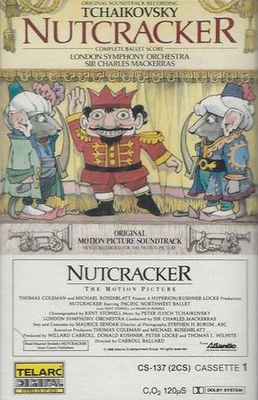
With so distinguished a conductor as Mackerras on the podium, that was to be expected. He leads an exciting, involving performance which responds sensitively to the ebb and flow of the drama. His emphasis is on lively forward momentum, but there are contrasting moments of grateful repose. His careful planning is much in evidence, for instance, in the Act III Adagio and the music that accompanies the growth of the Christmas Tree. These numbers can peak prematurely if they are not judiciously scaled, but in Mackerras' wise hands, the climaxes come just in the right places. His “Dance of the Sugar Plum Fairy“ is wonderfully shadowy and mysterious. In keeping with the Pacific Northwest Ballet production featured in the film, Mackerras emphasizes the score's dark and unruly side. As a result, Drosselmeyer's music is especially pungent, and, in Fritz's distruptive entrances, one can hear the “wild child cries and belly noises“ that Maurice Sendak, the production's designer, found in the music.
Despite all this, there are problems with this performance. These are perhaps due to the fact that Mackerras was not completely in charge of shaping the music, the tempos having been preset by choreographer and dancers. The movie has in places a disconcerting speeded-up quality. Although this is less marked in the recording, there are a number of tempo choices about which one could legitimately ask, “What's the hurry?“ As a result of this haste, there is occasional loss of detail, blurring of accompanying figures, and a couple of woodwind solos which are a bit of a scramble. To be honest, I observed this mainly in the early pages of the score; by the entrance of Drosselmeyer, there was marked improvement.
The film version makes some cuts in the music, but the recorded version presents it complete and offers a tiny bonus: the duet from the Mozartean masque in the Queen of Spades. This was interpolated in the Act I party scene in the Seattle production. It is pleasantly sung with a modified instrumental accompaniment, but it seems irrelevant here as, indeed, it did in the film.
Telarc's sound on both CD and LP is clear and pleasant, with digital cannon shots which may make you jump (a certain amount of surface noise, though, crackles gently in quiet passages on the LP).
Don C. Seibert